|
The Adams River Salmon Society |
||||||||||||||||||
|
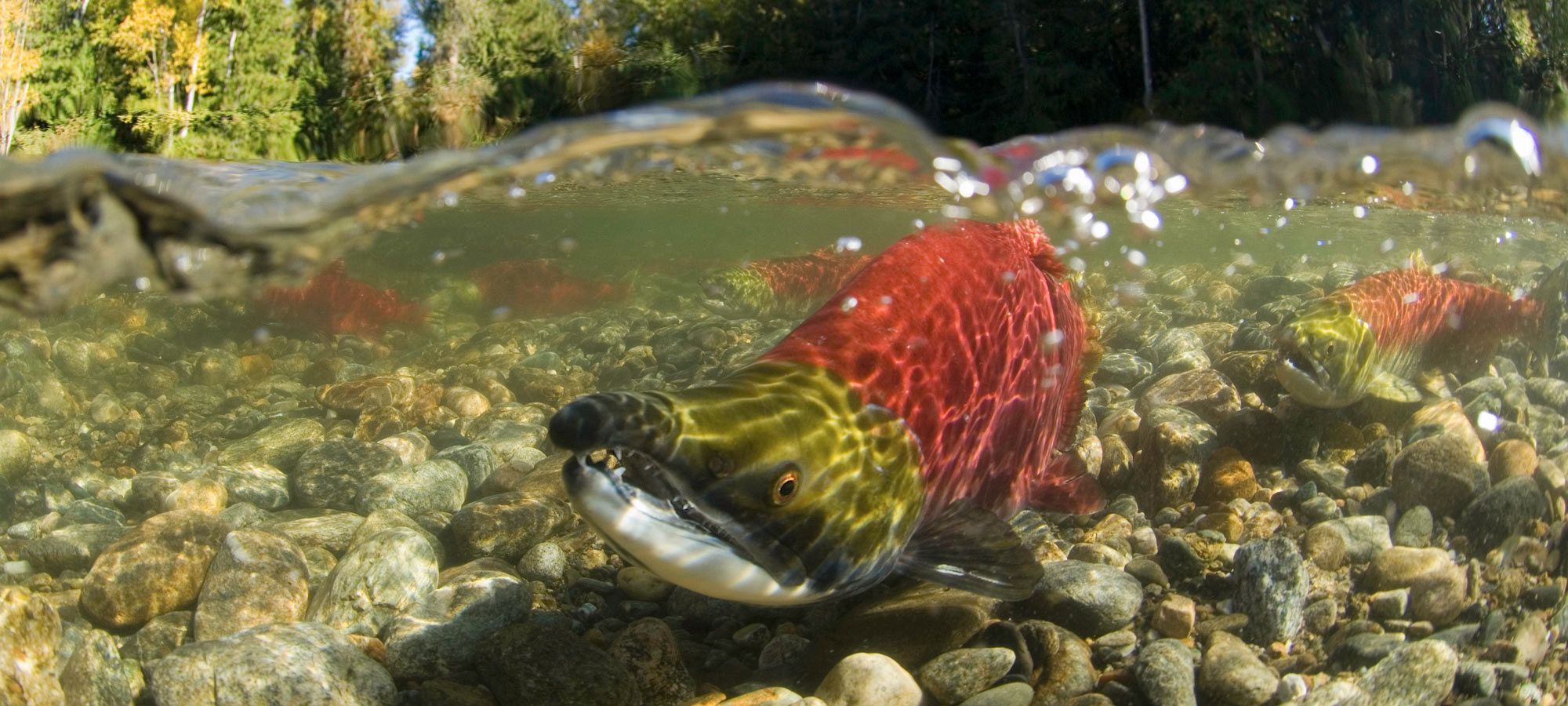
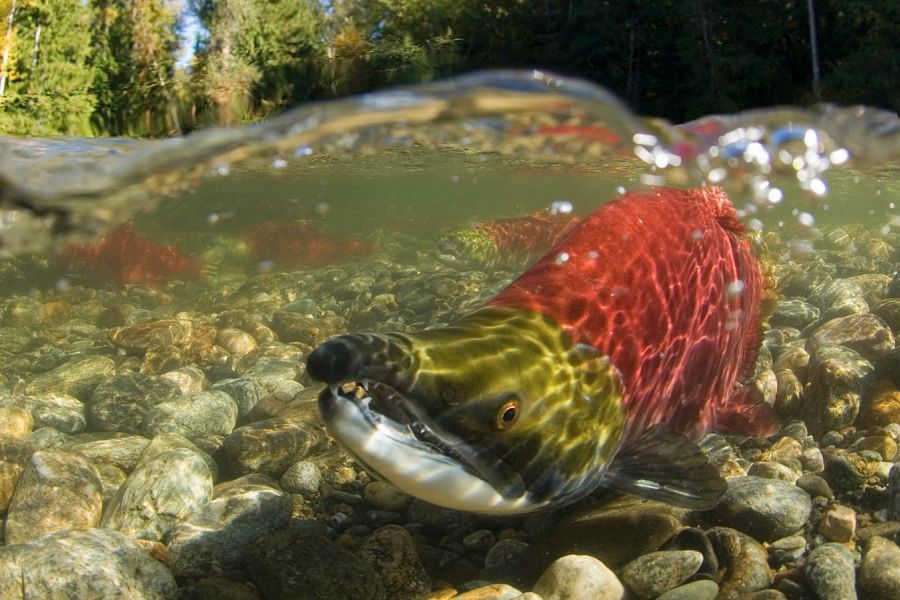
Media Releases and Stories Site Access Form DFO Site Access Disclaimer (word) Backgrounder: Salute to the Sockeye Can you imagine swimming 400 kilometres against a raging current, encountering thousands of obstacles along the way, not eating a bite of nourishment, with only one purpose to your journey -- to reproduce and die? Such is the fate of the Adams River sockeye salmon which are experiencing their dominant run this year -- a naturally occurring event which takes place every four years. The drama of reproduction is played out in exactly the same way every cycle - millions of sockeye make their way back to the gravel beds of the Adams River, the place of their birth, to spawn and die. The Adams River is located between the Adams and Shuswap Lakes, approximately one hour north of the city of Kamloops, British Columbia. Nestled in the foothills of the Columbia mountain range, the Roderick Haig-Brown Park, named after the world-renowned Canadian naturalist and fly fisherman, offers visitors year-round opportunities for hiking, mountain-biking, canoeing and kayaking, but it is the quadrennial return of the sockeye salmon that draws visitors by the hundreds of thousands to the park to witness this true miracle of nature. The four-year cycle of the sockeye salmon begins (or ends, depending on your perspective) during the month of October in the Adams River with the fertilization of hundreds of eggs. By February, tiny alevin emerge from the eggs to hide and feed among the gravel beds until the summer, fortifying themselves for the journey downstream to the Shuswap Lake. The tiny fish remain in the lake for one year, feeding on plankton and quadrupling in size. After a year in the lake, the sockeye develop the shiny silver skin of smolts. When the surface water temperature of the nursing lake warms up to between 4 to 7º C, most of the surviving smolts migrate down to the ocean where they will spend the next three years. After three years in the ocean, and after having survived what seem like insurmountable odds -- including predators, natural devastation and the nets of fishermen-- the remaining adult sockeye begin their laborious journey homeward once again. But how do the sockeye know where they are going? Much of the answer to that question is still a mystery although there are many scientific theories. There is some evidence that salmon may navigate by the sun and stars, and may even use the Earth's magnetic field to find the right stretch of coast. Recent studies show that migrating sockeye respond to large fluctuations in ocean conditions such as ocean temperature and salinity, and may alter their migration route based on these environmental cues Once close to the Fraser River they begin to use another faculty with amazing accuracy -- their sense of smell. Apparently, salmon fry imprint a clear memory of the unique smell or taste of their home stream, following landmarks linked with particular familiar smells until they find their stream of origin. It is this journey that has become the focus of a festival called the "Salute to the Sockeye," which takes place every fourth year during the dominant run. The origins of the celebration can be traced back forty years to 1958 when the International Pacific Salmon Commission was responsible for the management of sockeye salmon in the Fraser and Thompson River systems. The next festival will take place at Roderick Haig-Brown Park in October 2006. For more information about the Adams River sockeye run, contact: Lori Barron |
|||||||||||||||||