Adams River Salmon Society

Home

The Interp Ctr.

The Society

The Salmon

The Ecosystem

Haig Brown Park

RHB the Man

Kid Zone

Salute to The Sockeye

Images

Maps and Parking

School Tours

Partners & Sponsors

Contact us

Media Releases

Membership


Return to the Adams River

Homeward Bound

Now adult sleek and silver-coloured, the sockeye turn toward the coast of British Columbia. When they reach fresh water they stop eating and rely on body fat and protein to fuel their final drive toward their native streams.

Spawning Sockeye

Most of those that return are now four years old but some precocious males return as three-year-olds ("jacks"). Others stay in sea water for another year before returning to the river as five-year-olds.

As they make their way toward their spawning grounds, the returning sockeye must dodge the commercial nets and recreational and Native fisheries. And there are physical obstacles. In the Fraser River system the returning salmon face a punishing upstream journey in the face of opposing currents and rapids.

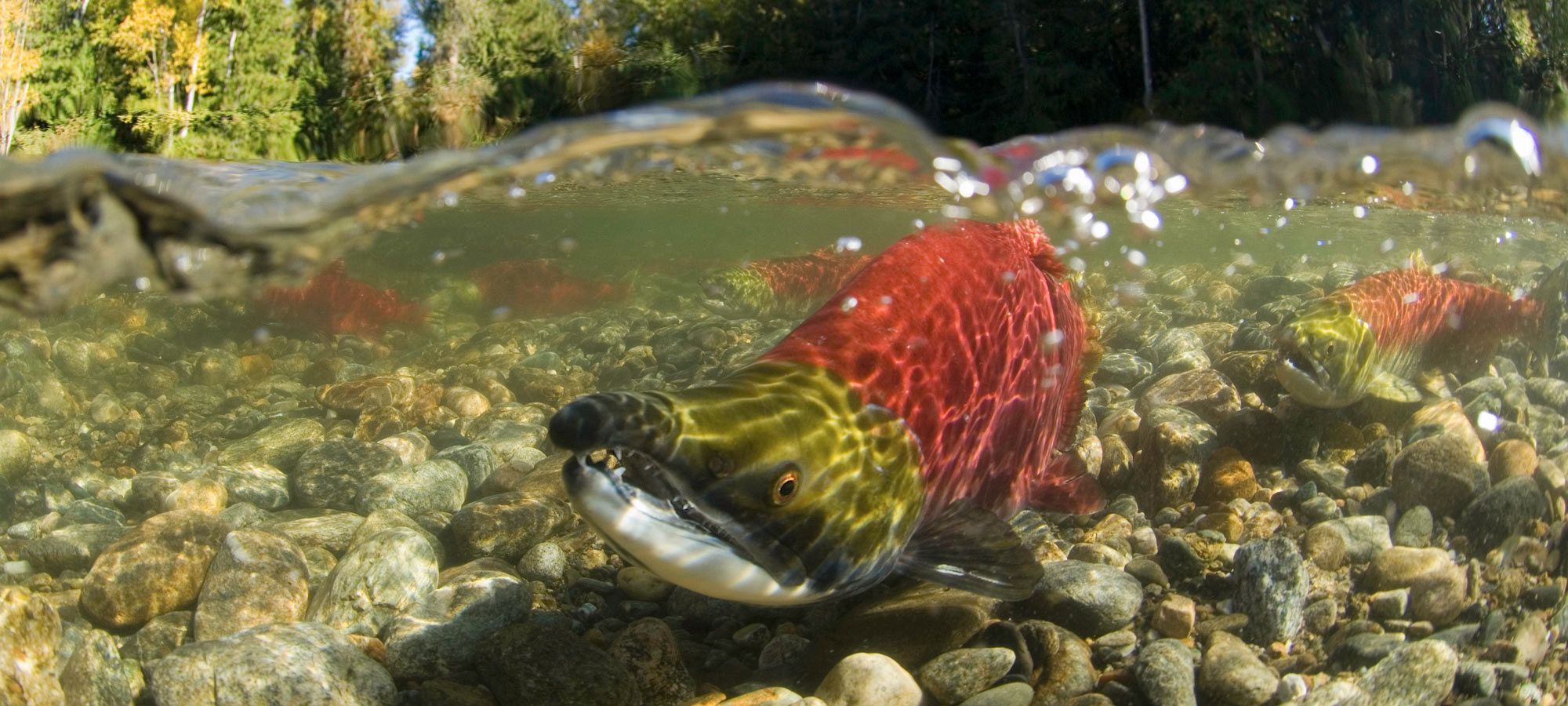
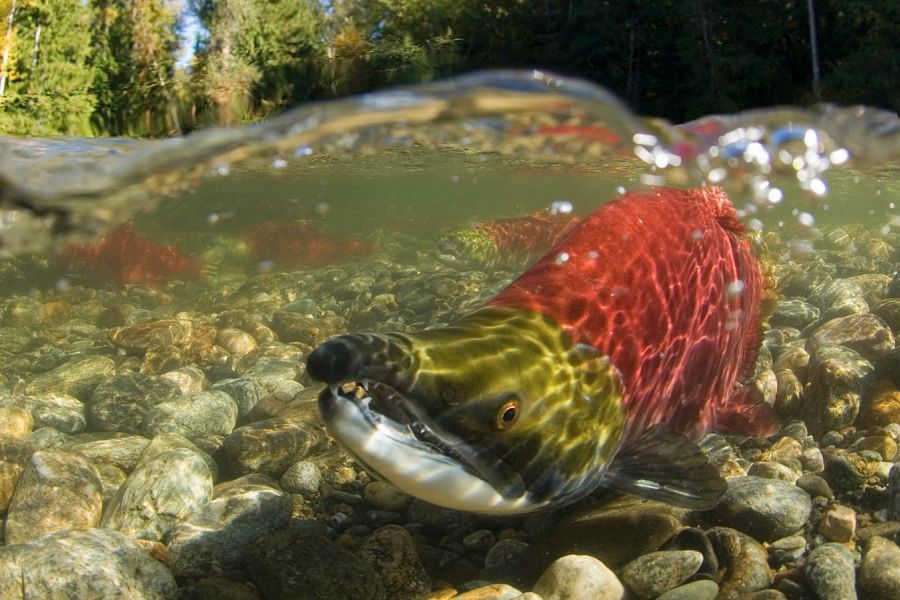
Swimming at an average rate of 29 km (18 miles) per day the fish take about 18 days to cover the distance from the mouth of the Fraser to their spawning grounds. Arriving battered and torn from their trek, their skin has also taken on a deep red colour characteristic of spawning sockeye.

At this point, the sockeye undergo another striking transformation as internal physical changes condition them for the final act. Their heads turn a deep green. The males develop humped backs and hooked snouts, and the bellies of the females swell with thousands of eggs.

The Final Act
Redd

Back at last in the waters they left as fry, the sockeye - two adult survivors for every 4,000 eggs that were deposited at the start - are ready to complete the cycle.

In the shallow gravel beds of the river, males and females pair as they search for nesting areas. The regeneration of the race is not a peaceful process. The first sockeye to arrive at the stream get the best- protected places and the surface churns as couples fight for space.

The male, his teeth now grown to fangs in an enlarged jaw, fights off other contenders. The female digs the nest (called a "redd") by lying on her side and flapping her tail after which she drops some of her eggs. The male fertilizes the eggs with a shower of milt.

The female covers the eggs with gravel. Pairs of fish then swim upstream to repeat the process until exhausted, they die. In some cases the female dies first and the male pairs again.

Eagles, ospreys and other birds swoop down to pick up the dead fish that litter the shallows. At night, mink, coyote and bears prowl the banks to get their share. By mid November the river returns to its former peace and nature seems to sleep under the snow of winter. But in the gravel life has already begun to stir - and a new cycle has begun.